What is prolactin ?
Prolactin is a hormone secreted by the anterior pituitary gland which maily plays a significant role in helping milk secretion in the postpartum period.
What causes prolactin levels to be raised ?
There are three main causes:
- Drugs like Metoclopromide, Chlorpromazine, anti depressants like Amitriptyline & Fluoxitene
- Underactive thyroid gland
- Prolactinomas – Prolactin-producing tumour of the pituitary gland. Prolactinomas occur most commonly in those under 40 years old. They are rare in children. These tumors are about fives times as common in women as men. These tumors account for at least 30% of all pituitary adenomas
What are the symptoms ?
In women
- Cessation of menses not related to menopause
- Abnormal milk flow from the breast not related to nursing or childbirth (galactorrhea)
- Infertility
- Decreased sexual interest
- Headache
- Visual changes
In men
- Enlargement of breast tissue (gynecomastia)
- Infertility
- Impotence
- Decreased sexual interest
- Headache
- Visual changes
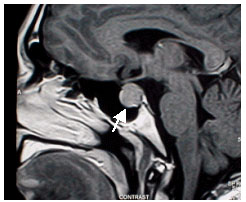
Large Prolactinoma
Large tumour, can cause pressure symptoms such as headache or visual problems. This is because the nerves to the eyes pass over the top of the pituitary gland. In a minority of patients, an increase in pituitary size may cause pressure on these nerves and produce visual disturbance.

What are the Investigations that will be required ?
1. Blood sample for
- Thyroid function test
- Prolactin levels ( Single values may be inconclusive three pooled samples might be required at times)
- Other Pituitary hormones
2. Visual field testing
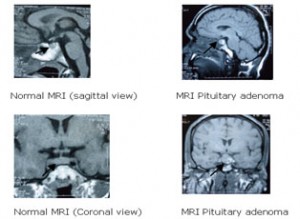
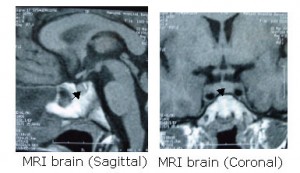
3. MR scan of the brain
4. Women who have not had periods for a year, and male patients should be offered bone density tests to ensure that they are not developing osteoporosis
What is the treatment ?
These are the most important pituitary tumors as the can be managed without surgery.
- Most patients are treated with:
- Bromocriptine (one tablet (2.5mg) twice or three times a day).
- Cabergoline long acting and requires one or two doses(0.5mg) per week
- Prolactin levels often fall to normal within a few weeks of starting the treatment. In women, once prolactin has fallen to normal, menstrual cycles usually resume, interest in sex is regained and fertility is restored in most cases. In men, testosterone levels may rise to normal, which brings an improvement in sex life.
- Rarely surgery is required when the tumors are resistant to treatment
- These drugs are very safe during pregnancy and thousands of normal ‘Bromocriptine babies’ have been born.
- Risk of tumor increasing in size during pregnancy is very remote.
- Side effects of Bromocriptine are very minimal & include nausea, vomiting & constipation.
This article is prepared along with Dr Menaka
When is surgery needed?
Pituitary surgery is required when there is a tumor in the pituitary gland
a. Secreting excess hormones
b. Causing compression of adjacent structures like the optic nerve causing visual disturbance
Who does Pituitary surgery?
Pituitary surgeries are normally done by Neurosurgeons.
Where from they can touch the gland?
There are two approaches that are commonly used:
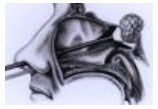
a. Transnasal approach: The gland is approached through the through the air sinus situated just in front of it. This is commonly used. Is less cumbersome than the other approach.

b. Transcranial approach: The gland is approached through an opening made in the skull
How long I need to stay in Hospital?
The patient needs to stay in the hospital for 3-4 days after surgery.
What are possible complications of surgery?
The complications that can arise after surgery include:
a. CSF rhinorrhoea: There can be a leak of the brain fluid (Cerebrospinal Fluid – CSF) through the nose after surgery. It is usually transient and settles down soon after surgery. If persistent can be a source of infection to the brain.
b. Diabetes insipidus: The posterior pituitary is responsible for maintenance of water & electrolyte balance in the body. Post op period can sometimes cause alteration in the secretion of posterior pituitary hormones.
c. Hypofunction of Pituitary hormones: If not from before, Hypopituitarism can develop after Pituitary surgery. There is nothing to worry about that we can now very effectively replace the deficient Pituitary hormones.
This article is prepared along with Dr Menaka
When is radiotherapy used?
- Reduce the size of pituitary tumors
- Prevent further growth of pituitary tumours
- Post-operatively to markedly decrease the chance of symptomatic tumour recurrence
- Reduce excessive hormone secretion (such as growth hormone or ACTH).
How is radiotherapy given?

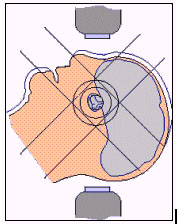
A clear plastic mask made specially for each patient’s head, holds the patient’s head still during the brief treatment. The targeting marks are lined up against the cross-beams of a laser set into the walls of the radiotherapy room. The radiotherapy treatment is delivered to the target area from three directions
What are the side effects?
- Hair Loss: Some hair loss occurs at both sideburn areas (temples) temporarily which can be covered by scalp hair
- Tiredness: Tiredness during and after treatment is quite normal. A good balance between activity and rest may actually help the feeling of tiredness
- Hypopituitarism
- Due to irradiation of hypothalamus leading to decreased releasing hormones
- Order of development is loss of GH followed by Gonadotropins, ACTH & TSH
- Visual impairment
Othere forms of radiotherapy
Local forms of radiotherapy – advantages are that a focused beam on the tumor with minimal damage to adjacent tissue
1. Gamma knife radiotherapy
- The Gamma Knife offers a non-invasive alternative for many patients for whom traditional brain surgery is not an option.
- Gamma Knife surgery removes the physical trauma and the majority of risks associated with conventional surgery.
- This effective single session treatment may require an overnight hospital stay, but is often done in an outpatient surgical setting with periodic follow-up.
- It has been proven safe over the long term and is recognized and covered by insurance plans. Based on preoperative radiological examinations, such as CT scans, MR scans and angiography, the unit provides highly accurate irradiation of deep-seated targets, using a multitude of collimated beams of ionizing radiation with scalpel-like precision.
- With the Gamma Knife, a surgical incision is not required; the attendant risks of open neurosurgical procedures (hemorrhage, infection, cerebrospinal fluid leakage, etc.) are therefore avoided
- Gamma-knife surgery is effective at stopping the abnormal hormone secretion that can occur from these tumors.
- Gamma-knife radiosurgery doesn’t have immediate results. Weeks, months, or even years, may pass before the effects of the treatment become apparent.
- Progress is monitored through follow-up imaging studies
2. Linear accelearator focal radiotherapy
- Radiosurgery can be preformed with linear accelerator machines.
- Radiosurgery is a one session surgical procedure directed by a neurosurgeon and a radiation oncologist.
- The total procedure occurs in one day from immobilization, scanning, planning and the procedure itself.
- With radiosurgery, the radiation dose given in one session is usually less than the total dose that would be given in radiation therapy
- This is important as higher radiation to surrounding areas when a person is given a few (2-5 treatments) may result in more side effects, some of which may be permanent.
- More importantly, the effect on a tumor of a reduced amount of radiation with each treatment versus a very high one time dose, can result in less tumor control and poorer outcomes than radiosurgery.
This article is prepared along with Dr Menaka
What is hypopituitarism ?
Hypopituitarism otherwise called as pituitary insufficiency refers to the low levels of circulating pituitary hormones.
What causes hypopituitarism?
- Parapituitary rumors
- Craniopharyngiomas
- Meningiomas
- Radiotherapy (pituitary, cranial, nasopharyngeal)
- Infarction (apoplexy), Shehan’s syndrome
- Infiltration of the pituitary gland ( Sarcoidosis, Lymphocytic hypophysistis, haemochromatosis)
What are the symptoms?
| Hormone def |
Clinical Features |
| GH |
· Reduced exercise capacity
· Reduced lean body mass
· Impaired psychological well being
· Increased Cardiovascular risk |
| LH/FSH |
· In women
. Anovulatory cycles
. Period problems
. Loss of libido
. Loss of secondary sexual hair
· In males
. Erectile dysfunction
. Testicular atrophy
. Loss of libido
. Loss of secondary sexual hair |
| ACTH |
· Anorexia/ weight losstiredness/ fatigue
· Dizziness/ postural hypotension
· Nausea, vomiting, abdominal pain
· Arthralgia/ myalgia
· Symptomatic hypoglycaemia |
| TSH |
· Fatigue, cramps
· Constipation
· Cold intolerance
· Weight gain
· Slowing of intellectual & motor activities
· Dry skin, hoarse voice |
| PRL |
· Failure of lactation |
| ADH |
· Excess thirst and urination |
What are the necessary investigations?
- Basal hormone levels
- Both basal concentrations of the pituitary hormones and the, target hormone levels are to be measured, as the pituitary hormones may remain within the target range despite low target hormone levels.
- LH, FSH, Oestradiol, Testosterone
- TSH and free T4
- 8 am cortisol
- Prolactin
- Dynamic testing
- Insulin tolerance test
- Short synacthen test
- Imaging

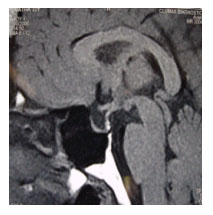
Empty sella (sagittal view)
What is the treatment?
- Adequate and appropriate replacement of the deficient pituitary hormones – At present we can replace all the hormones and life-style can be put back to normal.
- Hypopituitarism is usually permanent and requires life-long treatment.
This article is prepared along with Dr Menaka
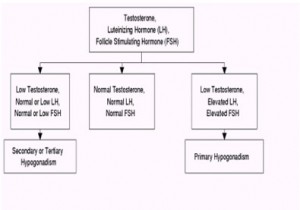
What is secondary hypogonadism?
Lack of gonadal hormones (Testorterone in men and Oestrogen in women) is called Hypogonadism and when this happens due to lack of Pituitary hormone it is called secondary Hypogonadism. Normally two Pituitary hormones known as LH and FSH are responsible for stimulating Testes and Ovarian in men a and women respectively.
Flow chart for Diagnosis of Hypogonadism in men

What are the symptoms ?
Menstrual irregularities, vaginal dryness, loss of libido, infertility in women & impotence , loss of secondary sexual characterstics & infertility in men are the common symptoms.
What are the causes?
- Idiopathic
- Functional
Too vigorous Exercise
Weight changes at both ends
Stress
Severe Systemic illness
- Structural
Pituitary tumour
Head trauma
Radiotherapy

Absence of secondary sexual characterstisc
What are the clinical features?
In men
Symptoms
- Physical fatigue
- Depression & Irritability
- Lethargy
- Impotence
- Loss of libido
- Muscular weakness
- Decreased shaving frequency
- Failure to progress through puberty
Signs
- Loss of body, facial and pubic hair
- Increased breast tissue (gynaecomastia)
- Smooth, fine wrinkly skin, especially on the face
- Reduced testicular size
Long Term Risk
Osteoporosis can occur, leading to increased risk of hip and spine fractures, if no treatment is given.
In women
- Absence of secondary sexual characterstics
- Amennorrhoea
What are the investigations required?
- Blood Investigations
- LH, FSH, Prolactin
- Testosterone/ Estradiol
- Imaging
- Gene studies
What are the treatment options ?
For men
| Preparation |
Dose |
Advantage |
Problems |
| IM Testosterone |
250mg 2/3 weeks |
2/3 weekly dosageEffective |
IM inj
Wide variations in levels ass. With symptoms |
| Implants |
200-600mg 3-6 mths |
Physiological levels acheived |
· Minor surg.procedure
· Risk of infection & pellet extrusion |
| TransdermalNon-scrotal |
2.5-7.5 mg daily |
Physiological levels acheived |
Skin reactions |
| Oral |
40 mg TDS25 mg TDS |
Oral preaparation |
· Highly variable efficacy
· Rarely acheives therapeutic levels |
| TransdermalScrotal |
4-6 mg daily |
Physiological levels acheived |
· Multiple dosing
· Supraphysiological levels
· Ass. with BPH
· Unacceptability of wearing patch |
Gonadotrophin replacement is only needed if the person wishes to have a child. Gonadotrophin injections are given until sufficient sperm is present in the ejaculate, which may take up to two years. Sperm can also be frozen for future use.
For women
- Cyclical estrogen progesterone preparations
- Gonadotrophin preparations
This article is prepared along with Dr Menaka
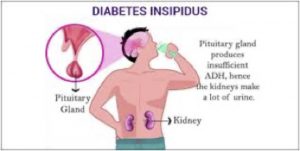
What is the normal function of Anti Diuretic hormone (ADH)?

What is DI?
diabainein: Greek, “to pass through”
insipidus: Latin, “having no flavor”
DI is defined as excess passage of large volumes (> 3 L/day) of dilute urine (osmolality< 300mOsmol/kg)
What are the causes of excess urination (increased urine volume)?
1. Diabetes Mellitus or sugar Diabetes
2. Cranial/ Central DI – Due to deficiency of circulating arginine vasopressin (Anti- Diuretic hormone- ADH)
3. Nephrogenic DI – Due to renal resistance to ADH
4. Primary polydypsia
Polyuria due to excessive drinking
5. Gestational DI – enzyme made by the placenta destroys ADH in the mother.
What are the causes of DI?
1. Cranial – 10% of vasopressin cells sufficient to keep urine volume < 4lt/day
- Familial
- Acquired
- Trauma (Head injury, neurosurgery)
- Tumors (Craniopharyngioma, pituitary infiltration by metastasis)
- Infiltrations
- Inflammatory conditions (Sarcoidosis, Histiocytosis, Lymphocytic hypophycitis)
- Vascular
- Idiopathic
2. Nephrogenic
- Familia
- X-linked
- Autosomal recessive
- Acquired
- Drugs (Lithium, Demeclocycline)
- Metabolic (Hypercalcaemia, Hypokalaemia, Hyperglycaemia)
- CRF
- Post obstructive uropathy
3. Primary polydipsia
- Functional
What are the symptoms?
- Excessive urination (>3lt/day)
- The most common form of DI is that which follows trauma or surgery to the region of the pituitary and hypothalamus. It may exhibit 1 of 3 patterns-transient, permanent, or triphasic. The triphasic pattern is observed more often clinically.
- First, a polyuric phase occurs and lasts 4-5 days. Inhibition of ADH causes the polyuric phase. An immediate increase in urine volume and a concomitant fall in urine osmolality occur.
- Second, antidiuretic phase of 5-6 days occurs, which results from release of stored hormone. The urine osmolality rises.
- The third phase can be permanent DI, when stores of ADH are exhausted and the cells that produce more ADH are absent or unable to produce.
What are the investigations required?
- Confirm large quantities of urine
- Rule out Diabetes mellitus / Renal failure
- Fluid deprivation test
- Allow fluids overnight. If psychogenic polydipsia is suspected restrict overnight fluid restriction to avoid morning overhydration
- Patient is deprived of fluids for eight hours or until 5% loss of body weight if earlier. Weigh patient hourly
- Plasma osmolality measured every 4 hours & urine osmolality every hour
- Patient is given Desmopressin injection when three consecutive urine osmolality show a difference of not more than 30 mosmol/kg and urine & plasma osmolality are measured
| Diagnosis |
After fluid deprivation |
After desmopressin |
| Cranial DI |
<300 |
>800 |
| Nephrogenic DI |
<300 |
<300 |
| Psychogenic |
>800 |
>800 |
| Partial DI/ Polydipsia |
300-800 |
<800 |
- Serum ACE ( sarcoidosis) & other tumor markers
What are the symptoms?
- Vasopressin analogue which has reduced pressor activity & increased antidiuretic efficacy
- Orally (100-1000mcg/day)
- Intranasally (10-40mcg/day0)
- Parenterally (0.1-2 mcg/day)
- Monitoring of Sodium & osmolality is essential
- Correction of underlying renal causes
- In Nephrogenic DI Thiazide diuretics (Therapeutic paradox) & prostaglandin synthase inhibitors can be helpful
This article is prepared along with Dr Menaka
Why does adult GH deficiency occur?
- Secondary to pituitary tumor
- Any pathology surrounding Pituitary gland
- Effects of surgery or radiotherapy to pituitary
How frequent is it?
One in 10,000 people are affected
Who should be tested?
1. Patients with hypothalamo-pituitary diseases.
2. Childhood onset GH deficiency.
3. Undergone cranial irradiation
How is it diagnosed?
- Single GH values are non-conclusive
What are the benefits?
1. Improve quality of life & psychological well being – most important effect noticed.
2. Improve exercise capacity
3. Prolonged treatment with GH > 24 months has shown to increase BMD
4. Reduction in cholesterol (approx 15%)
5. Improved ventricular function & left ventricular mass.
This article is prepared along with Dr Menaka
What is acromegaly?
The clinical condition arising from excessive Growth hormone (GH) secretion in adults is called Acromegaly. GH secretion is characterized by blunting of pulsatile secretion and failure of GH to become undetectable during the 24 hour day, unlike normal individuals.
How common is it and what age group is affected?
- Scientists estimate that about 3-4 out of every million people develop acromegaly each year.
- 40 to 60 out of every million people suffer from the disease at any time.
- Onset is insidious, therefore considerable delay between onset of clinical features & diagnosis
- Most cases are diagnosed at 40 – 60 years.
Causes of Acromegaly
- Pituitary adenomas (>99% of cases) Macroadenomas > Microadenomas
- Ectopic GHRH secretion e.g. Carcinoid tumors(pancreas, lung), Other neuroendocrine tumors
- Ectopic GH secretion – Very rare

Clinical features
- Change in ring or shoe size
Signs
- Enlarged jaw (prognathism) and tongue
- Thickening of the skin, skin tags
- Joint pain (hip pain, knee pain, ankle pain, foot pain, pain over the small joints of the foot, shoulder pain, elbow pain, wrist pain, hand pain, pain over the small joints of the hand, or pain in any other joint)
Additional symptoms that may be associated with this disease
- Weight gain (unintentional)
- Hair, excessive on females
What are the investigations?
- The level of growth hormone is high
- A single value might be inconclusive. A GTT – GH is normally performed, where the patient is given 100gm of Glucose and blood samples are taken at baseline, I hour & 2 hourslater. We normally anticipate the Growth hormone levels to be below 2ng/ml when the sugar is high.
- The level of IGF-1 (insulin-like growth factor 1) is high.
- A spine X-ray shows abnormal bone growth.
- A cranial MRI may show a pituitary tumor.

This disease may also alter the results of the following
- Other pituitary function test
What are the treatment options?
- Surgery
- If there is a pituitary adenoma resposible fot the tumor resection of the tumor is the best available option.
- Reported cure rates vary 40-91% for microadenomas & 10-48% for macroadenomas
- Radiotherapy
- Reserved for patients with unsuccessful surgical treatment.
- Largest fall in GH occurs in the first two years.
- With a starting GH>50mU/L it takes on an average 6 years to achieve mean GH < 5mU/L compared to 4 years with GH<50mU/L.
- Somatostatin analogues
- Usual dose is 50-200mcg SC thrice daily
- Depot preparations can be given every 14 to 28 days
- Can be used as primary therapy, before surgery or when surgery or radiotherapy have failed
- Dopamine agonists
- Particularly useful when there is coexistent prolactin secreting tumors
- GH receptor antagonists (pegvisomant)
- Normalistion of IGF 1 levels have been documented
- More data required on tumor shrinkage
This article is prepared along with Dr Menaka
How can I see the Pituitary Gland?
The pituitary gland is best visualized by a MR scan of the brain, though an X-ray or a CT scan can throw some light on the anatomy of the gland. This MR scan can be done with and without contrast.

What hormones can be checked?
All the hormones secreted by the pituitary gland can be checked using simple blood tests.
How often they need to be checked?
It depends, to diagnose we need to check once. After treatment to monitor therapy we need to check, the frequency depends on the diagnosis and type of treatment.
How do we check Pituitary Hormones?
The pituitary hormones can be checked by blood samples. Since there is a diurnal (day and night) variation of all the hormones in the human body, the samples should ideally be taken early in the morning when there is a peak level of hormones. Some blood tests will require hormone sampling later in the day when the hormone levels are low. These are called basal samples.
In most of the cases we need dynamic tests, which means we need to check after stimulating or suppressing the hormone we need to assess. The rule of thumb is if we are investigating underactive pituitary we need to stimulate the maximum reserve the gland has. Similarly in case of overactive gland we need to suppress.
This article is prepared along with Dr Menaka
What is Pituitary?
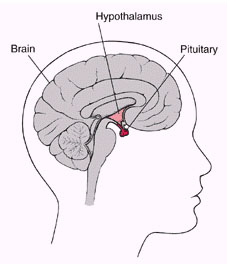
The pituitary is a Master gland which is about the size of a pea and is situated in the base of the brain. It is called the “Master gland” as it controls the functions of the other endocrine glands.
It has got two lobes:
- Anterior lobe
- Posterior lobe

What is its’ function?
Each lobe of the pituitary gland secretes hormones, which in turn control the other endocrine glands in the human body

Anterior lobe
- Growth hormone
- Prolactin – to stimulate milk production in women after giving birth
- ACTH (adrenocorticotropic hormone) – to stimulate the adrenal glands
- TSH (thyroid-stimulating hormone) – to stimulate the thyroid gland
- FSH (follicle-stimulating hormone) – to stimulate the ovaries and testes
- LH (luteinizing hormone) – to stimulate the ovaries or testes
Posterior lobe
- ADH (antidiuretic hormone) – to increase absorption of water into the blood by the kidneys
- Oxytocin – to contract the uterus during childbirth and stimulate milk production
What way it can go wrong?
There can be either an over functioning or under functioning of the entire pituitary gland or of one of its lobes or hormone secreting cells.
How would I know my Pituitary needs checking?
Symptoms vary depending on whether there is an over production or under production of the gland.
Growth hormone:
Over production: Can lead to Gigantism in children & Acromegaly in adults. There is a coarsening of the facial features, with large hands & legs, increased sweating and thickening of the skin. Underproduction: In children this leads to stunted growth and dwarfism. In adults Growth Hormone deficiency can cause lot of metabolic derangements, over the last few years we have started using Growth Hormone in adults with GH deficiency.
Prolactin:
Over production: Excess prolactin causes irregular menstrual cycles, breast discharge; infertility in women and in men can cause impotence and infertility. Under production: This rare deficiency can cause decreased milk production after child birth.
TSH:
Over production: Increased production of TSH stimulates the thyroid gland to produce more of its hormones causing excess sweating, weight loss despite increased appetite, increased frequency of defaecation, anxiety, restlessness & tremors. Under production: Decreased production of thyroid hormones lead to excess weight gain, lethargy, dry skin, constipation, menstrual irregularities.
ACTH:
Over production: Increased production of steroid hormones lead to excess weight gain, easy bruisability of skin, increased blood pressure & blood sugar, menstrual irregularities. Under production: Decreased production of steroid hormones can cause fatigability, low blood pressure, low sugar & excessive weakness.
LH & FSH:
Under production: Menstrual irregularities, vaginal dryness loss of libido, infertility in women & impotence, loss of secondary sexual characteristics & infertility in men.
This article is prepared along with Dr Menaka
|
|